
The Language of Light
What if the secret to unforgettable lighting isn't in lamps at all, but in learning to see? This episode traces how lighting evolved from chandelier-bright stages to sculpted, story-driven worlds, then distills light into four simple, practical qualities. Along the way, real-world moments become creative blueprints: how do you describe the perfect lighting you see to collaborators so it can be rebuilt on set? Why does looking at the subject, not the source, change everything? And who really decides whether a scene glows under a winter moon or broods in shadow?
This is a transcript from Visium: The Secret Language of Images. Listen to the episode below:
Movies owe a lot to theater. Sure, we take things from other art forms too, like photography and music. But no other art form influenced filmmaking as much as theater did. In the 18th century, theater was a popular pastime in Europe. It drew large audiences and was very different than what we know as theater today. Audiences were very engaged, reacting to the actors on stage and even speaking to them.
The fictional world on stage and the real one in front of it weren’t so separated like it is today, when we sit silently and watch a play. This was evident in the way the theater was lit - bright and even. Big chandeliers with candles were hung overhead, lighting both the stage and the audience. The main purpose of lighting was visibility.


Inigo Jones, by William Charles Thomas Dobson
And then, somewhere in the early 17th century, an English architect named Inigo Jones came up with an idea. Can mirrors be used to enhance the intensity of the light emitted by candles? These were the first reflectors, and artists quickly discovered that this trick doesn’t only make things brighter. It focuses the light, making the stage brighter than the audience and can even make some areas on the stage brighter than other areas. The road to using lamps as a creative tool was set. Who knows, maybe the fact that the audience found themselves sitting in the dark contributed to the expected behavior in a theater today, to be quiet and watch.
I’m Tal Lazar, and this is Visium—where we explore images and figure out what makes them work. In this first series, we’re focusing on the images you see in movies.
Let’s say that you’re sitting at a bar in the evening with your friend. Suddenly you notice the light, something just clicks. Maybe some streetlamp shines through a window, or a fluorescent from another room. Whatever it is, its beautiful, and it’s the kind of look that could be perfect for a scene in your film. Could you recreate it?
Most great lighting ideas come from the real world. Cinematographers and lighting designers observe the world around them all the time and catch these small moments. If you went through the photo album on my smartphone you’d find pictures of shadows on a sidewalk or a wall, and sun coming in through windows. These are just reminders for myself of special moments when the light did something interesting.
Observing light is great, but it’s not enough if you want to use it for inspiration. A big part of filmmaking is communication, and to create a lighting effect the cinematographer needs to communicate with the director, gaffer and key grip - who later work with their teams to set up lamps and stands. Even the pictures on my phone are not enough to make my intentions clear, I have to use words. That’s why knowing the basic qualities of light is so important. It’s not even just so that you can communicate your intention to others, it’s so that you can remember it. Because if we can’t articulate something in words, its much harder for us to remember it.
Light only has four basic qualities. Take a moment to pick a light source next to you, maybe the sun coming through a window or a table lamp. Pause this podcast and try to describe the light using only four qualities. What would they be?


When cinematographers learn lighting, they are trained to successfully recreate interior and exterior day and night scenes. But who gets to decide whether its day or night, exterior or interior?
When working with lighting, we need to first make an important distinction. Light itself is not visible to us when its traveling through space. So we either look at the light source, or the subject, where light falls on. Most people mix up the source and the subject, and say things like “the table lamp was very cool.” And that’s fine, we’re not going to be petty here. But understanding the difference between the source and the subject is important, since lighting is not about lamps at all. It’s all about observation. If you can observe light and describe it, then you can be a great lighting designer. Knowing how to set up lamps or having encyclopedic knowledge of them doesn’t guarantee great lighting at all.
When we want to understand the effect of light, the way it actually looks, we observe the subject. That’s where the truth is. That’s what the audience sees and reacts to. When we want to understand how that effect is achieved, we look at the source. So when you think of the qualities of light, consider where you are looking at. Now, I know there are exceptions to this - what about car headlines shining straight at the camera? But let’s keep it simple for now.
The first and most simple quality of light is intensity. Is it bright? Is it dim? Of course, there’s a catch here. Intensity is very relative. A flashlight can be very bright in a dark room, but on a bright sunny beach it would be insignificant. So it’s not enough to say that something is bright or dark, you need to give some context. If I say “the moonlight makes the bed appear bright in the dark room.” then you imagine something realistic, since moonlight can make something bright, but not extremely bright like the sun.

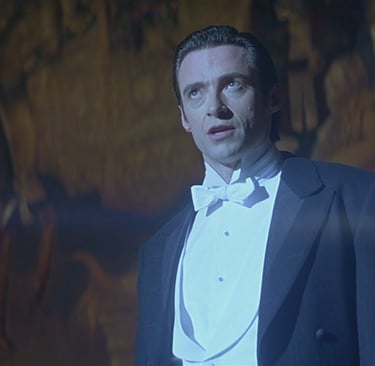
The next quality of light is color. Now, many people talk about color in terms of cool or warm. That’s color temperature, which we mentioned in our episode about color. But color temperature is actually a very limited scale. It only describes differences on a range between blue and orange. Green, for example, is not really on this scale at all. So it’s better to leave color temperature to the technicians and use the HSV color model we discussed before, mainly thinking of color in terms of hue an and saturation.
We never design lighting in abstract setting, it’s never lighting people, it’s always lighting a specific person. So it’s important to look at color, like intensity, within the context where it appears - that’s what the audience is going to react to. When wondering how it’s achieved, we look at the source.
The next and last quality of light is also the most difficult to see. Diffusion. Light can be hard or soft. If you feel confident that you can tell the difference, then look at a picture with soft or hard light and point to where you see it. How do you know if lighting is soft or hard?
We look at the subject. It’s not in the shadows, and it’s also not in the areas that are lit. It’s in between. If the lighting is hard, then the transition from dark to light is quick and sudden, maybe you’ll even see a sharp line where a shadow ends. But if the lighting is soft, then the transition is much more gradual. When the lighting is very soft, it’s sometimes hard to tell where the light stops and the shadow begins.
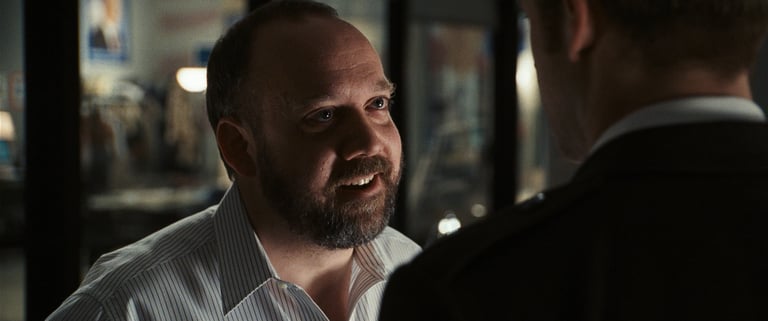

Soft lighting is considered more complementary to the human face since it hides the texture of our skin. Texture, created by wrinkles and pores, is actually just small shadows. When the lighting is soft, these shadows blend and disappear, making surfaces appear smoother.
Intensity, angle, color and diffusion. These are the four qualities of lighting. Memorize them and practice them. I tell students to write them on a piece of paper and put it in their wallet. Every day, find an opportunity to describe a lighting effect using these four qualities. You’ll discover that very quickly, you won’t need that piece of paper. Knowing these qualities will help you remember lighting and communicate your intentions to your collaborators.
There’s actually a fifth quality for when you’re ready - movement. Lighting can move and change. When you feel like you’ve mastered the four basic qualities, try to notice when and how lighting moves around you too. Remember, we are looking at the subject, not just the source. The sunlight moving across seats when an airplane turns, or the light of car headlights passing on a hero’s face in a dark diner… these can all be part of great story moments.
And this is really what it’s all about - storytelling. And why lighting is as much the domain of the director as it is the cinematographer’s. When cinematographers learn lighting, they are trained to successfully recreate interior and exterior day and night scenes. But who gets to decide whether its day or night, exterior or interior? And if it’s, say, day. What kind of a day is it? Is it in the winter? Is it raining? Or maybe it’s a summer morning? Is it in the city, or maybe the countryside where the sun can shine directly in the room?
You see, building a fictional world is as much part of lighting as writing up an equipment list and setting up lamps. Maybe it’s even more. Because each of these decisions - the time of day, the location, the season, the weather… they are all motivated by the story. It’s not a coincidence that many breakup scenes happen when it’s winter and raining…
And of course, even figuring out things like location and time is just the beginning. If you compare scenes set at night outside, let’s say from Brokeback Mountain or Zodiac, you’ll see that even night exterior can appear very differently in movies. In one movie the moonlight washes everything with a soft light, and in another everything is dark and threatening. The director’s participation in this is crucial, because it’s all part of the story.
That’s why using visual references is so important. When a director talks about night exterior, I bring up a few examples. Which one seems right? Why? How can we use it for the story? What if everything is visible because of a full moon, and then a cloud comes in, and now everything is dark? Story is all about transformation, after all.
Sounds interesting? Good, because we are just getting started with lighting. Next, we’ll talk about emulating lighting, and how to motivate light. If you're enjoying this journey, make sure to subscribe, leave a review, and join me next time as we keep exploring how filmmakers bring images—and stories—to life. If you have any thought, an example that wasn’t mentioned or a question, feel free to reach out—just email tal@cinematicimpact.com. You can also check out my book at thelanguageofcinematography.com.
Thanks for spending time with me today. Goodbye!


When I think of intensity, I’m not looking at the source. I’m looking at the subject and how it appears in the scene, since even small lamps can make something very bright, and powerful lamps can be used to make very fine adjustments in brightness - like fill light in a day exterior scene.
The next quality of light is angle, or direction. The light can come from above, below, or the side. If you think about it, angle is really about the relationship between the source and the subject. The source can only be high of the subject is low, right? That’s important to remember, because we’ll get back to this when we talk about blocking. People think that lighting is about positioning lamps, but it could easily be about positioning actors too. Even the most brilliant cinematographer can’t design great lighting without collaborating with the director and actors.
Try it out on this image from Barry Lyndon, directed by Stanley Kubrick
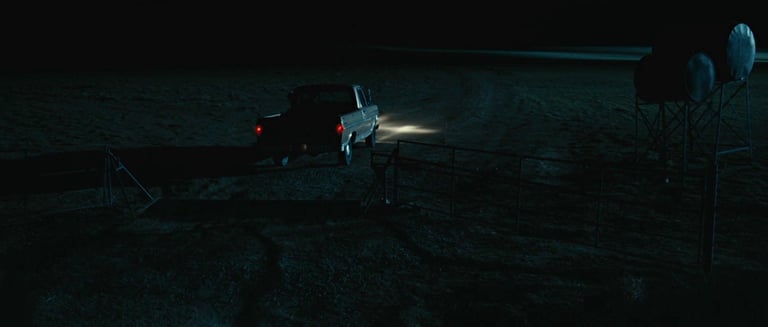
No Country for Old Men, directed by Joel and Ethan Coen
The Prestige, directed by Christopher Nolan
Gattaca, directed by Andrew Niccol

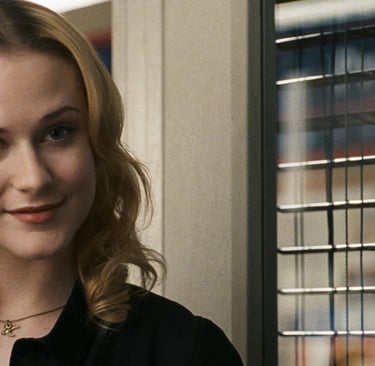
Soft and hard lighting in Ides of March, directed by George Clooney